|
|
 |
 |
|
|
 |
 |
 |
 |
 |
 |
 |
 |
 |
|
1778 Siege of Boonesborough and Re-enactor Appreciation Program 2010
|
|
|
|
 |
|
|
|
We want everyone to be aware that the Foundation will be serving food during the Siege weekend, INCLUDING BREAKFAST! Good breakfast at a good price will be available again!
The Fort Boonesborough Foundation has suggested a change in the drawing for the smoothbore flintlock gun this season. Since it is always more fun and exciting to see the reaction of the winner as his or her name is drawn, and as the gun is presented, the winner of the smoothbore will need to be present to win. The Siege of Boonesborough always has the highest number of participants of all our events, so the drawing, FOR THE GUN ONLY, will be during the Siege weekend. In the case of a name being drawn, and that person not being present, another name will be drawn, and repeated as necessary to award the gun to someone who is present. Remember that Friday, September 24, will be a school day preceding the Siege weekend, and all participants will have their name added to the hat twice for the day! This means your name can go in three times for the weekend!
We really appreciate everyone’s support of the Siege Re-enactment, and it seems like a great way to say thanks, by having someone who is present for the event go home with a new gun. The drawing for all other items in the program will be done as always, during the Winter Trade Days weekend on November 27-28, 2010.
|
|
|
|
 |
|
|
|
French and Indian War Weekend
July 17-18
The Seven Years War Society is coming to Fort Boonesborough to demonstrate and display life on the frontier during the French and Indian War. Before the American Revolution, the French and Indian War was a global struggle that was fought over who would control the new world. The frontier of Kentucky was vital to the French and Indians as they launched bloody raids into the heart of colonial British America. Armed groups patrolled the roads in defense of the bloody raids. Over the weekend there will be re-enactors displaying the various uniforms from the French Marine of New France to the Royal 42nd Scottish Highlanders, Native American re-enactors, artillery and infantry drill, and a mock raid on the fort. Event is free with admission to fort. Open 9 a.m..- 5:30 p.m. Call 859-527-3131.
|
|
|
|
 |
|
|
 |
 |
 |
|
Women on the Frontier 2010
|
|
|
 |
 |
|
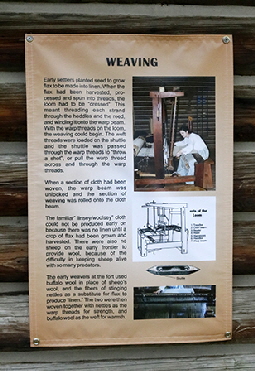
Learning and fun were the recurring themes at Fort Boonesborough’s 6th Annual Womwn on the Frontier Weekend. Character interpretation along with frontier skills were the primary themes. Participants could try their hand at spinning, weaving, knitting and cooking. Native skills like beadworking and fingerweaving were also on the agenda. This weekend has always been devoted to women re-enactors but also draws men, children and lots of visitors. Photos from the event.
|
 |
 |
|
New Interpretive Programs for 2010
|
 |
 |
|
New interpretive topics and programs have been added for the 2010 season at Fort Boonesborough. Several additional and important parts of Kentucky’s early history will be featured, including First Person Character Interpretation of Daniel Boone, Early Distilling and Whiskey Production in Kentucky, Slaves and Free Blacks on the Frontier, Indentures and Apprentice Contracts to 18th C. Tradesmen.
|
 |
 |
 |
 |
 |
 |
 |
 |
 |
 |
 |
 |
 |
 |
|
 |
|
|
|
Josiah MacMillan, a native of Liberia who came to America three years ago will be the primary interpreter of the Slaves and Free Blacks on the Frontier program. Liberia, on the west coast of Africa, has a long history of association with slavery. This interpretive program is new to Boonesborough, and to Kentucky State Parks. Slaves were present with Daniel Boone and approximately thirty axmen who cleared a path to the Kentucky River and the site of Boonesborough in 1775, and continued to be a vital part of changing the “howling wilderness” of western Virginia into the Commonwealth of Kentucky during the last quarter of the 18th. Century.
|
|
|
|
|
|
By 1790, the time of the first “federal” census, there were over 12,000 slaves in what is now Kentucky. A very large part of the work of clearing land, raising cabins, planting crops, and tending livestock, was accomplished by slaves. Slaves also worked at a variety of skilled crafts, such as blacksmithing, woodworking, spinning, weaving, brick making, building, rope making, and several others.
|
|
|
|
|
 |
|
|
|
|
Josiah MacMillan
|
|
|
|
|
|
Scott New, who portrays Daniel Boone for the Kentucky Humanities Council, will be adding a number of new interpretive programs this 2010 season as well. He will expand the first-person character portrayals of Boone, which are scheduled throughout the day in varied locations, and posted by “broadsides” and handbills each morning. He will also present programs, as a historian, on a wide variety of themes and topics concerning the 18th. Century frontier. Program titles include “Boones Trace and the Wilderness Road”, “Daniel Boone – Man vs. Myth”, Kentucky during the American Revolution”, and “A Guided Walking Tour of the Original Fort Site”.
|
|
|
|
|
|
|
Scott New as Daniel Boone addresses a group of School children.
|
|
|
|
 |
 |
|
The programs featuring first person portrayals of Boone will be centered on specific dates and occurrences during Boone’s life at Boonesborough during the revolution.
|
|
|
 |
 |
|
Kentucky Bourbon Whiskey wasn’t always “Bourbon”, but the history of distilling in early Kentucky began right here in central Kentucky, and another new interpretive feature at Boonesborough tells the story. Bob Caudill, a Winchester native, grew up on the site of Strode’s Station, another frontier site begun shortly after Boonesborough. With a lifelong interest in Kentucky history, and continuing research into the early days of Boonesborough and the surrounding countryside, Bob is well suited to presenting the story of distilled spirits on the Kentucky Frontier. The thousands of gallons of whiskey, who made it, how it was made, the process of shipping down-river to New Orleans, and the specific things that make whiskey “Bourbon”, are all interesting items to learn about at the Fort.
|
|
|
|
 |
 |
|
Larry MacQuown. gunmaker
|
|
 |
 |
|
The gun maker’s shop in the fort is a good place to discover the processes of learning a trade in the 18th. Century. Whether by Indenture, or Apprenticeship, the variations in contracts and agreements varied widely. Larry MacQuown interprets the building of flintlock guns, and has researched the various means of learning the gunsmith’s trade in the 18th Century. His shop also includes an amazing piece of 18th century machinery called a rifling bench, used to cut internal, spiral grooves in rifle barrels for improved long range accuracy. Come try it out as an “apprentice”
|
 |
 |
|
Shop Our 18th Century Transylvania Store Make credit card purchases of your favorite store items 24/7
|
 |
 |
|
The original Fort Boonesborough was built by Daniel Boone and his men in 1775
|
 |
 |
|
All material contained in this site is © 2006 -2010 Fort Boonesborough
|
|
|
 |
|